Advanced PTZ Camera Controller Techniques for Smooth Operation
Updated: Aug 24
In modern video production, precision and control define the quality of your output. Simply owning a PTZ camera is no longer enough; what truly sets professionals apart is how effectively they operate it. Whether you are handling a live broadcast, streaming an event, or producing digital content, mastering advanced PTZ camera controller techniques allows you to deliver a smoother and far more engaging visual experience.
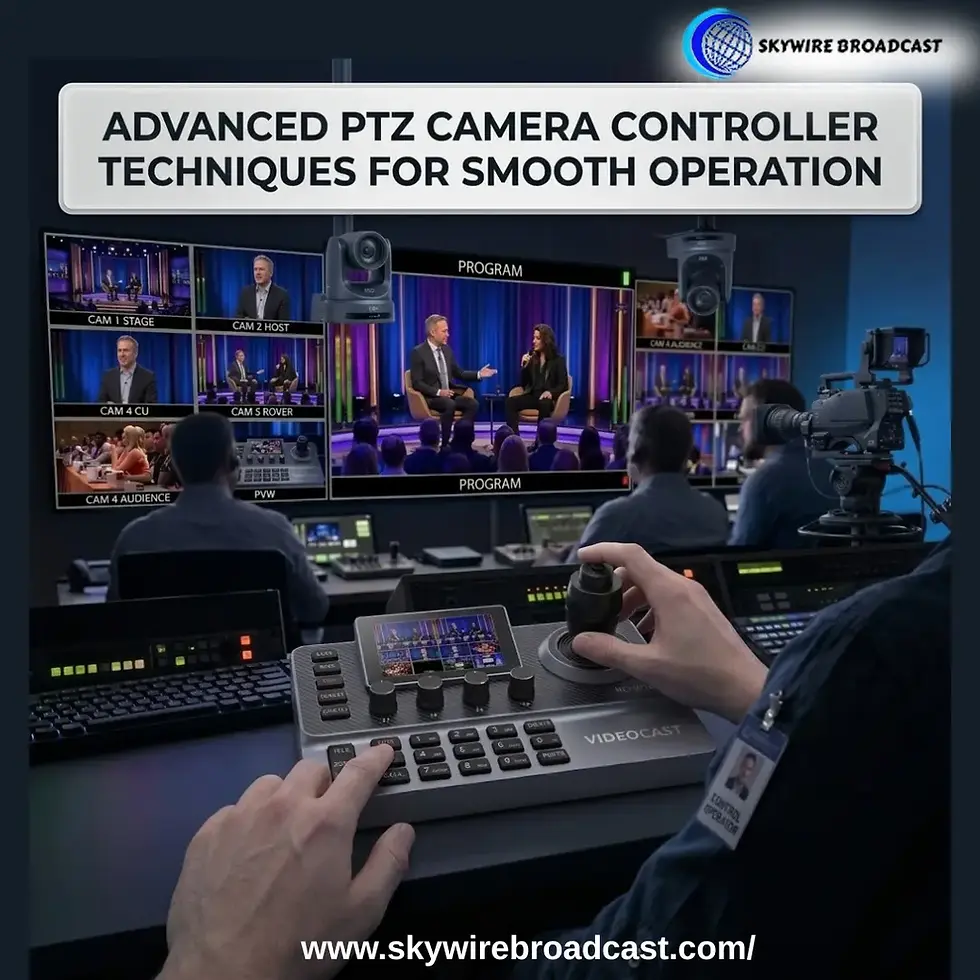
The difference between an average production and a professional one often comes down to movement. Viewers may not consciously notice good camera work, but they will immediately feel when something is off. Jerky transitions, inconsistent framing, or overly fast zooms can break immersion, while smooth, intentional motion keeps the audience focused and engaged.
The Importance of Controlled Camera Movement
Every camera movement should feel purposeful. Instead of reacting randomly, experienced operators anticipate the next shot and guide the camera into position with subtle, controlled motion. This approach creates a natural visual rhythm that enhances storytelling rather than distracting from it.
A well-controlled PTZ setup allows you to maintain visual consistency throughout your production. Movements become fluid, transitions feel seamless and the overall presentation appears far more polished. Over time, this level of control becomes instinctive, allowing operators to focus more on creativity than mechanics.
Using Presets with Strategy, Not Just Convenience
Preset positions are often seen as a shortcut, but in reality, they are a powerful creative tool when used correctly. Carefully planned presets allow you to move between important scenes—such as a presenter, audience, or wide-angle view—without hesitation or delay.
The key is thoughtful framing. Instead of setting extremely tight shots, leaving a bit of space within each preset provides flexibility during live adjustments. This small detail prevents awkward reframing and helps maintain smooth continuity throughout the production. When presets are used strategically, transitions feel instant yet natural, enhancing the overall viewing experience.
Refining Motion Through Speed and Sensitivity
Smooth operation is not just about moving the camera; it’s about how fast and how precisely those movements are executed. Fine-tuning the controller’s speed settings allows you to match motion with the tone of the content. Slower movements often work best for formal settings like conferences or speeches, while slightly faster transitions may suit dynamic environments.
At the same time, joystick sensitivity plays a crucial role in maintaining stability. A properly adjusted joystick controller allows for subtle corrections without causing sudden shifts in framing. This balance between speed and precision is what gives professional productions their signature smoothness.
Making Automation Work for You
In many production environments, repetition is unavoidable. This is where automation features like camera tours become incredibly valuable. By programming a sequence of movements between preset positions, you can create a consistent visual flow without constantly adjusting the camera manually.
Automation not only reduces workload but also ensures reliability. It is especially effective in scenarios where the structure of the event remains predictable, allowing you to maintain quality while focusing on other aspects of the production.
Elevating Visual Impact with Better Zoom Control
Zoom control is often underestimated, yet it has a significant impact on how professional your footage looks. Abrupt zooming can feel disorienting, while smooth and gradual zoom adjustments create a sense of depth and focus.
Instead of treating zoom as a basic function, experienced operators use it as a storytelling element. A gentle zoom-in can draw attention to a speaker, while a controlled zoom-out can reveal the broader context of a scene. When combined with slight camera movements, zoom becomes a powerful tool for creating dynamic yet stable visuals.
Handling Multi-Camera Productions with Confidence
As productions grow, managing multiple PTZ cameras becomes essential. This requires not only technical coordination but also a clear understanding of composition and timing. Each camera should complement the others, creating a seamless flow of visuals rather than a disjointed sequence.
Consistency is key. Matching movement styles, maintaining similar framing and transitioning smoothly between cameras all contribute to a cohesive production. When done correctly, multi-camera setups can dramatically enhance the viewer experience.
Embracing the Advantages of IP-Based Control
Modern PTZ systems are increasingly built around IP-based control, offering greater flexibility and scalability. This allows operators to manage cameras remotely, integrate with streaming systems and control multiple devices from a single interface.
The shift to IP control has made it easier than ever to handle complex productions efficiently. It also opens the door to remote workflows, giving teams the ability to operate from different locations without compromising on quality or control.
Choosing Equipment That Supports Professional Results
While technique is essential, the equipment you use also plays a major role in your performance. A high-quality PTZ camera controller provides smoother operation, better responsiveness and more reliable connectivity. These factors directly impact how effectively you can execute advanced techniques.
When selecting a controller, it’s worth focusing on features that enhance real-world usability, such as responsive controls, stable connectivity and an intuitive interface. The right choice not only improves efficiency but also allows you to operate with greater confidence.
Upgrade Your Workflow with Skywire Broadcast
If you are looking to take your production quality to the next level, upgrading your PTZ control system is a smart investment. Skywire Broadcast offers advanced PTZ camera controllers designed to deliver precision, reliability and ease of use in demanding environments.
With the right tools in place, you can focus less on technical limitations and more on creating high-quality, engaging content that stands out.
Final Thoughts
Mastering advanced PTZ camera controller techniques is ultimately about control, consistency and creativity. It’s the combination of technical skill and thoughtful execution that transforms simple camera movements into a professional visual experience.
As you continue refining your approach and upgrading your equipment, you’ll find that smooth operation becomes second nature—allowing you to deliver content that not only looks professional but also feels effortless to your audience.
For more information, contact us.
Email: sales@skywirebroadcast.com
Phone: +917042004116 / 9810321836
Website: www.skywirebroadcast.com
Frequently Asked Questions (FAQ)
1.Where to buy live streaming devices with high video quality in India?
You can buy high-quality live streaming devices in India from Skywire Broadcast, offering 4K PTZ cameras, encoders, switchers and complete professional streaming solutions.
2.What are the benefits of using PTZ cameras for live streaming?
PTZ cameras offer remote control, 4K video quality, wide coverage, AI auto-tracking and flexible connectivity, making them ideal for professional, efficient live streaming setups.
3.Where can I buy professional AV equipment for corporate conferencing in India?
Skywire Broadcast provides professional AV equipment for corporate conferencing in India, including PTZ cameras, video conferencing systems, switchers and complete integrated solutions.
4.Is investing in a high-quality PTZ controller worth it?
Yes, it significantly enhances control, reduces errors, and improves production quality, making it a valuable long-term investment.
5.Can PTZ controllers be used for remote production?
Yes, IP-based PTZ controllers enable remote operation, making them ideal for distributed teams and remote live-streaming setups.
6. How does joystick sensitivity affect camera operation?
Proper sensitivity settings ensure smooth, accurate movements without jerks, improving overall video quality and viewer experience.
7.How do presets enhance PTZ camera performance?
Presets allow instant switching between pre-defined camera angles, saving time and maintaining smooth, uninterrupted production flow.
8.Are PTZ camera controllers suitable for multi-camera setups?
Yes, advanced controllers allow centralised control of multiple cameras, ensuring consistent framing and smooth switching between shots.
9.What industries benefit most from PTZ camera controllers?
Broadcasting, corporate events, education, houses of worship and live streaming creators all benefit from precise PTZ control.
10.How does a PTZ controller improve live streaming quality?
It enables fluid camera movement, accurate framing, and seamless transitions, resulting in a more engaging and professional viewing experience.


Comments